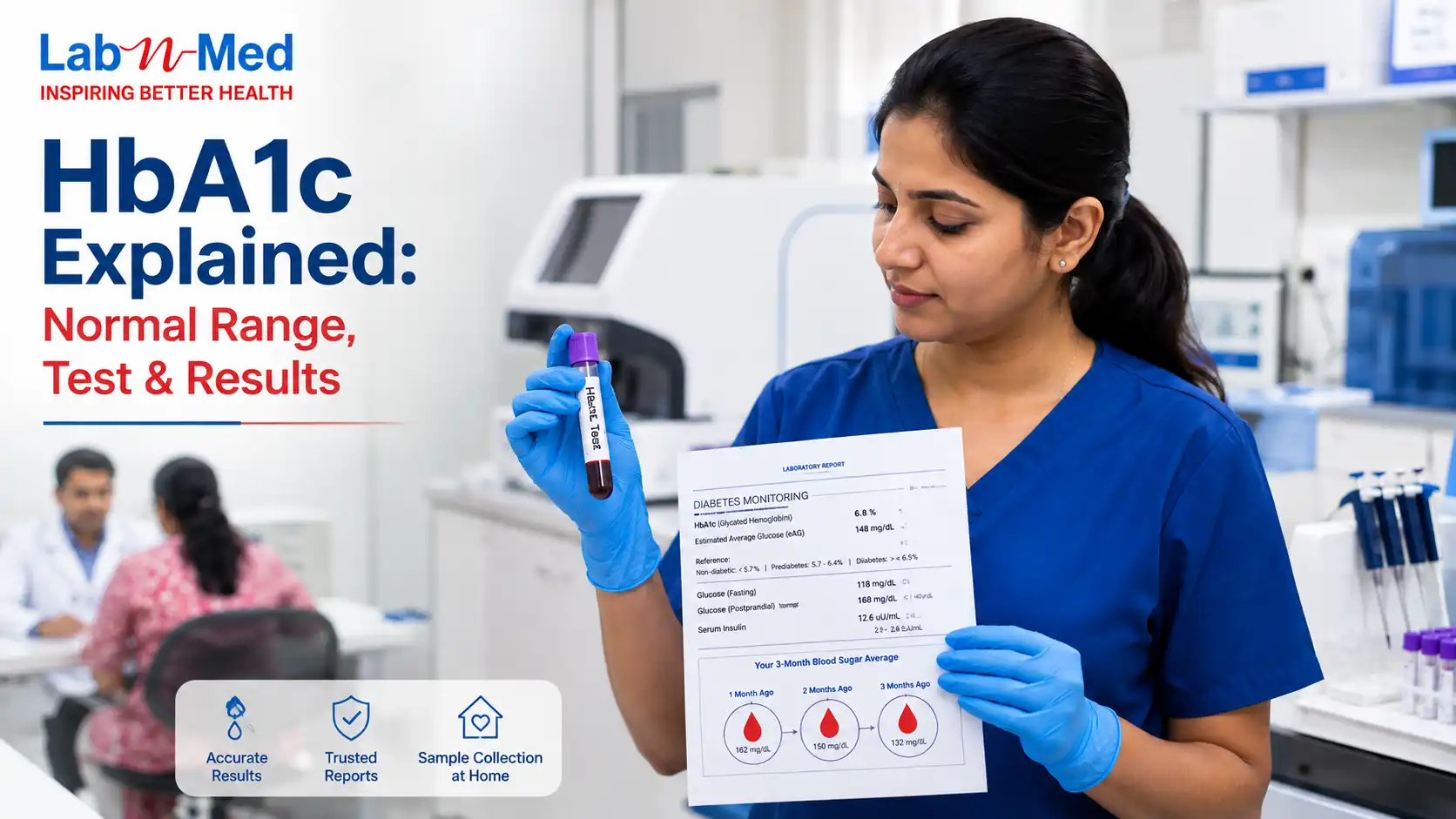
What Is HbA1c and Why Is It Important?
HbA1c explained means knowing that it's a blood test that shows the average blood sugar levels over the last few months.
HbA1c is haemoglobin that is glycated. Haemoglobin is a protein found in red blood cells that transports oxygen. When glucose is present in your bloodstream, a small amount of it is attached to haemoglobin.
Because red blood cells generally last for about 3 months or so, an HbA1c test is more reliable than a single blood glucose measurement.
The test is beneficial to:
-
Screening for prediabetes
-
Diagnosis screening for diabetes
-
Monitoring diabetes
-
Examining the extent to which blood sugar is being controlled
-
Discussing treatment options with your physician
In contrast to a fasting blood sugar test, you don't need to fast in order to take an HbA1c blood test.
HbA1c Explained: What Does the Test Measure?
An HbA1c test measures the percentage of haemoglobin with glucose attached to it.
For instance, an HbA1c reading of 6.5 percent indicates that around 6.5 percent of the haemoglobin tested is Glycated.
The test doesn't tell you the blood sugar level at a single moment. Instead, it gives an over-the-long-term view.
This is where the difference can be significant.
Your blood sugar level can fluctuate in response to exercise, meals, or stress, as well as illness and medications. HbA1c can help you see the bigger picture.

What Is the HbA1c Test Used For?
The problem with the HbA1c test is common, as people frequently mix HbA1c with regular blood glucose tests.
The test could assist doctors:
-
Recognize the possibility of prediabetes.
-
Identify possible diabetes.
-
Be sure to monitor people with diabetes.
-
Examine the long-term blood sugar control.
-
Monitor changes in lifestyle after treatment changes.
But a single test result cannot be taken to mean anything on its own. Your doctor might consider the medical history, symptoms, as well as other tests for glucose prior to making an assessment.
What Is the HbA1c Normal Range?
The most commonly used HbA1c categories that adults typically use are:
|
HbA1c results |
General definition |
|
Below 5.7% |
Usually, it is considered normal |
|
5.7%-6.4% |
Typically, prediabetes is thought to be prediabetes. |
|
6.5 percent or more |
Diabetic range |
These ranges can be useful in understanding the report.t However, the report itself requires an interpretation by a specialist.
A physician may suggest an additional glucose test, particularly if the results do not correspond to your medical history or symptoms.

Why Does HbA1c Have Different Targets?
The significance of the HbA1c test may differ for different people.
If someone is diagnosed with diabetes, the individual treatment goal might not be identical to the cutoffs for diagnosis above.
Age, pregnancy, medical illnesses, medications,s and the possibility of having low blood sugar could alter the recommended target set by a medical professional.
Don't treat a single number as a goal for all.
How Does HbA1c Reflect Your Average Blood Sugar?
HbA1c explained becomes simpler once you know about red blood cells.
The body continually produces red blood cells. Over the course of their life, blood glucose can connect to haemoglobin.
If blood glucose is elevated more often, more glucose is able to attach to haemoglobin.
Therefore:
A higher average blood sugar - more HbA1c
Lower average blood glucose - lower HbA1c
HbA1c's weighting is shifted more towards recent weeks, but it does reflect the amount of glucose consumed over three months.
This is the reason why tests will reveal patterns that one fasting glucose test could be missing.
What Are HbA1c Symptoms?
There are no signs caused by the HbA1c number in itself.
However, symptoms can occur when blood sugar levels remain high.
Some of the signs that could indicate high blood sugar are:
-
More thirst
-
Frequent urination
-
A strange fatigue
-
Vision blurred
-
Food insecurity is increasing
-
Unexplained weight loss
-
Slow-healing cuts
-
Recurrent infections
People with prediabetes or diabetes might be suffering from no apparent symptoms.
This is one reason why screening is crucial, particularly for those who have risks.
If you are experiencing any concerns, consult a medical expert before waiting for symptoms to develop into something more serious.

What Can Cause a High HbA1c?
A high HbA1c typically indicates that blood glucose levels have been above the target level over time.
Common contributors are:
-
Diabetes
-
Prediabetes
-
Insulin resistance
-
Certain medicines
-
Physical activity changes
-
Dietary patterns
-
Ailment or any other health condition
But HbA1c doesn't always reveal the entire story.
Certain conditions that affect haemoglobin and red blood cells could affect the results. Your doctor might therefore recommend different tests if your HbA1c test results seem to be inconsistent with your glucose levels.
Can HbA1c Be Low?
Yes.
Low HbA1c levels can be a sign that the average blood glucose level is low. However, a suddenly low HbA1c result could also require examination.
Changes in the lifespan of red blood cells could alter the accuracy of HbA1c.
Examples include:
-
Certain kinds of anaemia.
-
Recent blood loss
-
Transfusion of blood
-
A few haemoglobin derivatives
-
Red blood cell conditions can affect their lifespan
If your HbA1c test results do not correspond with your normal glucose levels, talk about the issue with your physician.
How Is the HbA1c Test Done?
An HbA1c test can be described as an easy blood test.
A medical professional will take small amounts of blood, typically from a vein in your arm.
The sample is then sent to a lab to be analyzed.
Do You Need to Fast for HbA1c?
Most of the time, fasting is not necessary for an HbA1c test.
It is generally possible to consume food and drinks normally, unless your doctor has instructed you to fast if various tests will be done simultaneously.
If your test kit includes fasting glucose or lipid profile, as well as other tests for fasting, you must follow the directions provided by your lab or physician.
How Often Should HbA1c Be Checked?
The frequency will vary based on your health and the treatment program.
For those with diabetes, doctors may suggest periodic testing throughout the year.
People who have prediabetes might also require periodic checking.
The exact timing of the schedule will depend on:
-
Your HbA1c test results from the past
-
Treatment for diabetes
-
Control of blood glucose
-
Changes in the medication
-
Pregnancy
-
Other medical ailments
Your physician can suggest the best time for testing.

What Is the Difference Between HbA1c and Blood Sugar Tests?
Both tests are designed to measure information related to glucose. However, they also respond to different questions.
|
Test |
What it reveals |
|
Fasting blood sugar |
Blood glucose after fasting |
|
Random blood glucose levels |
Blood sugar levels at a specific moment |
|
Post-meal glucose |
Blood glucose after eating |
|
HbA1c |
Longer-term average glucose exposure |
Imagine it in this manner:
Blood glucose = snapshot
HbA1c = longer-term picture
Both are useful.
Can HbA1c Diagnose Diabetes?
An HbA1c level within the diabetes range could confirm a diagnosis of diabetes.
However, the diagnosis must be confirmed by a certified medical expert.
For those with no clear signs, an abnormal test result could require confirmation by repeat testing or another approved diagnostic test.
This is crucial because certain medical conditions may affect HbA1c's accuracy.
Do not make a self-diagnosis by relying on a lab report.
What Can Affect HbA1c Test Results?
A variety of factors can affect HbA1c.
A significant group is those that alter red blood cells or haemoglobin.
Other variables could include:
-
Anaemia
-
Recent blood loss
-
Transfusions of blood
-
Kidney disease
-
Certain variants of haemoglobin
-
Pregnancy
-
Certain medications
-
Red blood cell health can be affected by a variety of factors. life span
However, this does not mean that the test isn't reliable.
The result must be considered in the proper clinical context.
If you suffer from a blood disorder or a health condition that affects the red blood cell count, you should inform your doctor prior to making a decision on the results.
Is HbA1c Better Than a Fasting Blood Sugar Test?
The tests are not simply "better."
They offer a variety of details.
The HbA1c provides a longer-term view and is not required for fasting. Fasting glucose is a measure of blood glucose level following the specified time period, without food.
Doctors may perform multiple tests or a single test in accordance with the circumstances.
For instance, an individual may be able to take an HbA1c test in conjunction with fasting glucose, as part of the larger evaluation.
Can You Lower Your HbA1c Naturally?
Lifestyle changes can improve the blood sugar control of many people.
The most helpful practices include:
A balanced diet is essential.
Make sure you are eating vegetables and whole grains, pulses, lean protein, and appropriate portions.
Keep physically active
Regular exercise can increase the sensitivity to insulin and control of blood glucose.
Maintain an appropriate weight
For those who are overweight, a gradual loss of weight will allow for better control of glucose.
Make sure you take prescribed medications in a safe manner.
Do not stop or alter your medications for diabetes without seeking medical advice.
Rest soundly
Sleep deprivation can make managing blood glucose more difficult.
Check your glucose level regularly and take note of any changes.
Monitoring your glucose levels at home will assist you in understanding how your meals, exercise, and medications alter the blood sugar levels of your patients.
Keep in mind that lifestyle modifications should be used in conjunction with, not to replace, medical treatments when they have been ordered.
When Should You Consult a Doctor About HbA1c?
It is recommended to discuss your results with your doctor in the following situations:
-
Your HbA1c falls within the diabetes or prediabetes range.
-
Your score has risen significantly.
-
There are signs of hyperglycemia.
-
The readings of your glucose and HbA1c don't match.
-
There is a problem that could affect the accuracy of HbA1c.
-
You already take medications for diabetes.
-
You are expecting or planning for a pregnancy.
A doctor can explain what your test result indicates for your specific circumstances.
Where Can You Get an HbA1c Test in Gurugram?
If you're in search of easy diagnostic testing, Lab-n-Med Gurugram offers online test booking and diagnostic services.
The site provides a comprehensive range of health and test packages. The site also offers home blood sample collection that can be beneficial when traveling to a laboratory is difficult.
Book an Assessment with Lab-n-Med
Lab-n-Med declares that it cooperates in conjunction with NABL and ISO 15189 accredited laboratories and provides digital report delivery.
To determine the best assessment and interpretation of your results, follow the advice of your physician.
Why Choose Home Blood Sample Collection?
Blood sample collections at home will help with routine testing.
Instead of traveling to a diagnostic facility instead, you can arrange an appointment for a test that is eligible and let a certified professional take the sample at your place of residence.
This is especially useful for:
-
Older adults
-
People with mobility issues
-
Professionals on the move
-
Families with multiple test needs
-
People who would rather use services at home
Lab-n-Med offers online booking of diagnostic tests as well as taking-home samples.
CTA: Are you ready to test your blood sugar level? Schedule your HbA1c test through Lab-n-Med.
Book Your HbA1c Test
Frequently Asked Questions About HbA1c
1. What is HbA1c, in simplest phrases?
HbA1c is the name of a blood test that shows the average blood glucose level over the last one to three months. It determines the amount of glucose that is bound to haemoglobin in red blood cells. It also aids doctors in identifying diabetes and keeping track of blood sugar levels.
2. Is an HbA1c test conducted on a full stomach?
Usually, no. HbA1c tests generally do not require fasting, as it evaluates the long-term glucose exposure as opposed to your blood sugar levels at a certain time. However, fasting could be necessary if your physician requires other tests in addition to HbA1c.
3. What is a typical HbA1c value?
For the commonly used adult diagnosis categories, HbA1c lower than 5.7 percent is considered normal. 5.7 percent to 6.4 percent falls within the prediabetes range. 6.5 percent or more is considered to be in the diabetes range. The doctor will be able to interpret the result.
4. What are the signs and symptoms of high HbA1c levels that are high?
A high HbA1c level by itself doesn't cause any symptoms. However, persistently high blood sugar could result in increased thirst, fatigue, frequent urination, blurred vision, increased appetite, and unrelated weight loss. Certain people may experience excessive blood sugar but not show any signs.
5. Can HbA1c detect diabetes?
Yes. HbA1c is a recognized test to screen for and diagnose diabetes. A test result that falls within the diabetes range could require confirmation, particularly if there are no apparent signs. Doctors may also perform the glucose test by fasting or by any other method.
6. How long will the HbA1c test run?
The process of collecting blood typically takes just about a couple of minutes. The processing time of the laboratory depends on the diagnostic center and the method of testing. Following processing the report, it can aid your doctor in understanding the pattern of your blood sugar over time.
7. How can HbA1c be changed in three months?
Yes. HbA1c levels can fluctuate depending on how your blood glucose fluctuates. Because red blood cells have the ability to last for three months, the effects of lifestyle changes or medication, illness, and other variables can affect the outcome in the course of time.
8. Do I have the ability to take an HbA1c test at home?
Yes, based on the availability of service in your location. Lab-n-Med provides home blood sample collection for qualified diagnostic tests. It is possible to check the availability of tests and book a blood sample collection via its online booking system.
Key Takeaway: HbA1c Explained in One Minute
HbA1c explained in simple words: it is a long-term blood sugar test.
It displays the average amount of glucose you have consumed over the span of one to three months. It can aid in identifying prediabetes as well as diabetes, and help monitor those with diabetes.
Remember:
-
HbA1c is not usually a requirement for fasting.
-
Below 5.7 percent is considered to be normal.
-
5.7%-6.4 percent is the typical prediabetes spectrum.
-
6.5 percent or more is usually the normal range for diabetes.
-
The medical condition can influence the outcome.
-
The doctor who examined you should interpret the report.
If you require a quick and easy test, then you should look into Lab-n-Med's diagnostic and home blood sample collection in Gurugram.
Get your HbA1c blood test now and get to know the significance of your blood sugar levels.
Read Also... CRP Test: What High Inflammation Markers Mean
Read Also... Iron Profile Test: Ferritin, TIBC & What They Reveal
Read Also... TSH, T3, T4: What Your Thyroid Test Report Actually Means
Read Also... CBC Test: Normal Range, Meaning, and Why It's Done