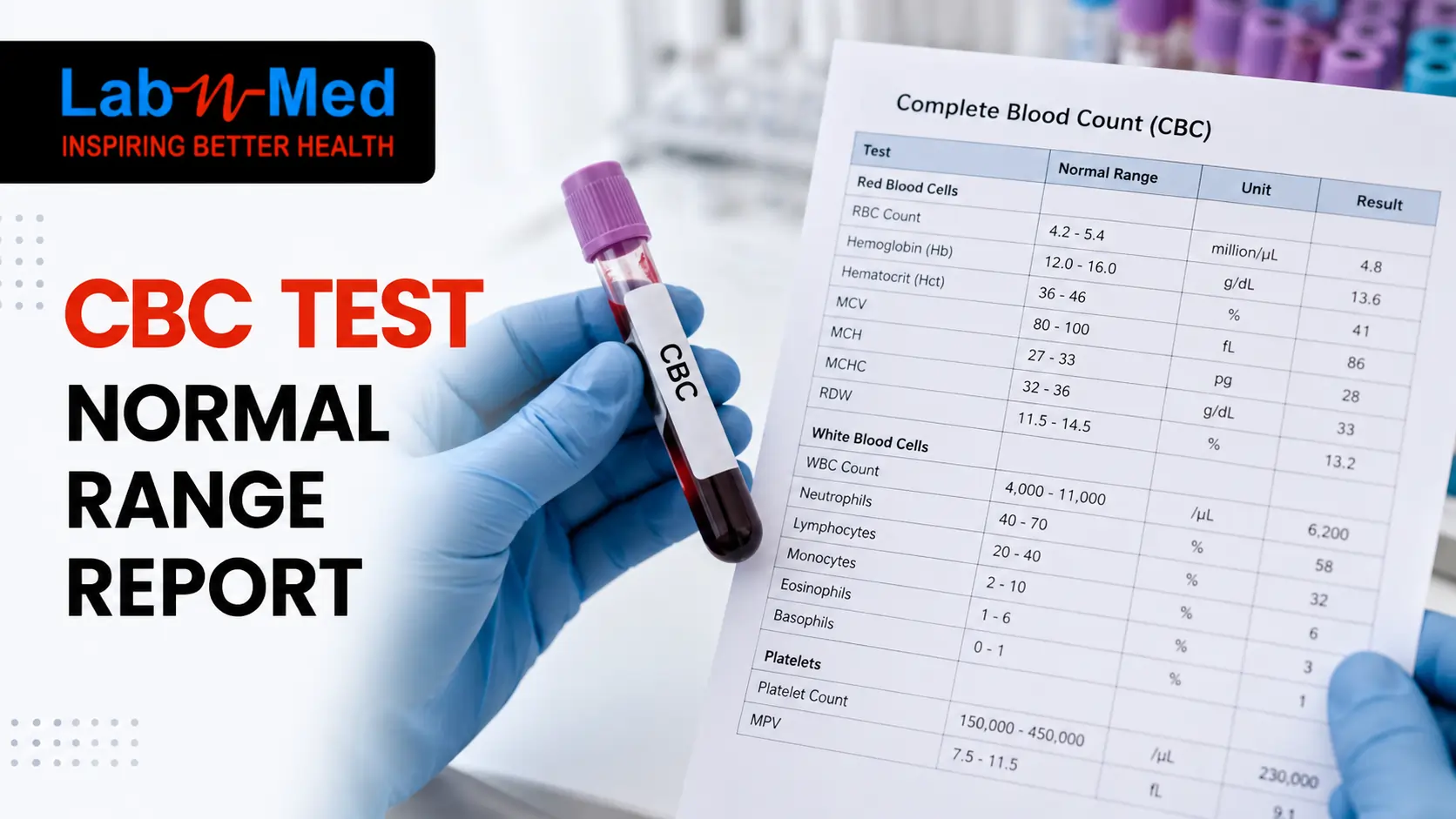
The normal range for a CBC is a reference for healthy blood cell values, including WBC, RBC, hemoglobin, hematocrit, and platelets. These ranges will tell you whether your blood count is within normal limits or requires review by your doctor. Variations depend on gender, age, and laboratory method.
If you've just received the Complete Blood Count report, you're likely looking through it for one question: are your results normal? This guide will break down every CBC measurement, demonstrate the range of normal values for gender and age, and explain what each indicates about your health.

What Is a CBC Test?
The Complete Blood Count, or CB, is one of the most frequent blood tests ordered by doctors. It measures three major kinds of blood cells: red blood cells, white blood cells, as well as platelets.
A single test could reveal inflammation, anemia, and clotting issues. The majority of doctors request it as part of routine examinations. They may also request it when you experience fever, fatigue,ue or unprovoked bruising.
The test will require a small blood sample, typically from a vein within the arm. The majority of labs, like Lab n Med, don't require fasting for a typical CBC.
A CBC report is usually returned within a couple of hours. LabnMed provides results as fast as 6 hours, which means you don't need to wait weeks to know what your status is.
How Is a CBC Test Performed?
The procedure is fast and doesn't require much preparation. A skilled phlebotomist will draw the blood out of a vein, typically in your arm, with a sterilized needle and vial.
The sample is sent to a lab where an automated analyzer counts and analyzes each blood cell type. The machine can check size, shape, concentration, and other factors in just a few minutes. A pathologist examines the report before releasing it as a final report.
The entire process will take just five to six minutes. A slight discomfort or bump at the site is normal and will disappear within a few days. With Lab n Med's home collection services, all of this happens directly at your door, meaning you don't have to travel or wait in waiting rooms altogether.
Understanding Your CBC Report: A Step-by-Step Guide
A CBC report can be initially confusing; however, it is an easy pattern once you are aware of what to be looking for.
Step 1. Look at your reference range column. Every lab prints its own normal range alongside the result. The range you choose is most important, not a generic chart that you can download from the internet.
Step 2. Compare your number to the specified area. If your number falls in between the marks of high and low, the result is considered normal. Anything higher or lower is flagged, typically in bold or another shade.
Step 3: Examine your pattern and don't look at only the one numeral. A single borderline value is rarely meaningful by itself. Doctors examine the way your values are related to one another, such as MCV and hemoglobin, before making a decision.
Step 4: Review past reports, if they exist. Trends over time show more than an individual photograph. A consistent drop in hemoglobin over 3 reports can be more important than a slightly low reading.
Step 5: Present this report with you to see your medical professional. Your report is an aid to assist your doctor, but not an indication of a diagnosis on its own. Bring it along to the next visit, particularly when multiple values are highlighted.

What Is the CBC Test Normal Range?
The table below outlines the typical CBC test range normal for healthy adults. Use it to help you make an aid your research; however, remember that your lab's range printed that appears on your report is the one that will apply to your results.
| Parameter | Normal Range (Adult) |
| WBC (White Blood Cells) | 4,500 - 11,000 cells/uL |
| RBC (Red Blood Cells) | 4.2 - 6.2 million cells/uL |
| Hemoglobin | 12 - 18 g/dL |
| Hematocrit | 36% - 55% |
| Platelet Count | 150,000 - 400,000/uL |
| MCV | 80 - 100 fL |
| MCH | 27 - 32 pg/cell |
| MCHC | 32 - 36 g/dL |
| RDW | 11% - 15% |
These figures cover the majority of healthy adults. However, women, men, and children have their own range of expectations. Let's take a look at the next.
What Is CBC Test Normal Range in Male?
Men tend to have more red blood cells than women. This is due to testosterone's effects on red blood cell production.
| Parameter | Normal Range (Male) |
| RBC | 4.6 - 6.2 million cells/uL |
| Hemoglobin | 13 - 18 g/dL |
| Hematocrit | 40% - 55% |
| WBC | 4,500 - 11,000 cells/uL |
| Platelets | 150,000 - 400,000/uL |
If your hemoglobin or hematocrit is lower than this level, your doctor can test for anemia. If your hemoglobin is high, the likelihood of dehydration or smoking is usually one of the things they inquire about.

What Is CBC Test Normal Range in Female?
Women generally have the same amount of red cells but with a lower percentage than males. Menstrual bleeding is the most significant reason behind this difference.
| Parameter | Normal Range (Female) |
| RBC | 4.2 - 5.4 million cells/uL |
| Hemoglobin | 12 - 16 g/dL |
| Hematocrit | 36% - 48% |
| WBC | 4,500 - 11,000 cells/uL |
| Platelets | 150,000 - 400,000/uL |
Women who are pregnant often have lower levels of hemoglobin as a result of increased blood volume. This is generally expected but isn't always a sign of anemia. However, your physician should confirm this through your personal medical report.
What Is Normal CBC Count by Age?
CBC values vary drastically from birth until adulthood. The blood count of a newborn is not like that of a teenager, and that's perfectly normal.
| Age Group | Hemoglobin Range | WBC Range |
| Newborn (0-1 Month) | 14 - 24 g/dL | 9,000 - 30,000/uL |
| Infant (1-12 months) | 9.5 - 14 g/dL | 6,000 - 17,500/uL |
| Child (1-6 years old) | 9.5 - 14 g/dL | 5,000 - 15,500/uL |
| Child (6-18 years old) | 11.5 - 15.5 g/dL | 4,500 - 13,500/uL |
| Adult (18 years old and above) | 12 - 18 g/dL | 4,500 - 11,000/uL |
Newborns naturally have higher hemoglobin since they require more oxygen supply right after birth. The hemoglobin level gradually decreases during the initial few months. Pediatricians monitor this decline closely. Don't be concerned when your child's chart looks like an adult's.
CBC Test Normal Range Chart (All Parameters)
Here's a condensed CBC Test Normal Range Chart that you could save to refer to in future reports. It includes every fundamental parameter in a comprehensive CBC panel.
| Test Parameter | Normal Range | Unit |
| WBC | 4,500 - 11,000 | cells/uL |
| Neutrophils | 40 - 60 | % |
| Lymphocytes | 20 - 40 | % |
| Monocytes | 2 - 8 | % |
| Eosinophils | 1 - 4 | % |
| Basophils | 0.5 - 1 | % |
| RBC | 4.2 - 6.2 | million/uL |
| Hemoglobin | 12 - 18 | g/dL |
| Hematocrit | 36 - 55 | % |
| MCV | 80 - 100 | fL |
| MCH | 27 - 32 | Pg |
| MCHC | 32 - 36 | g/dL |
| RDW | 11 - 15 | % |
| Platelet Count | 150,000 - 400,000 | /uL |
| MPV | 7.5 - 11.5 | fL |
You can save this chart or snap a photo. This is the most convenient method of checking any CBC report in one glance.

What Does Each CBC Parameter Mean?
Each value you see on your CBC report reveals a tiny piece of the bigger picture. What's most important is.
WBC (White Blood Cells). They fight off infection. A high count usually points to inflammation or infection. A low count could indicate an insufficient immune response or a viral infection.
RBC, Hemoglobin, and Hematocrit. These three interact. The presence of low levels can indicate anemia that causes dizziness, fatigue, as well as pale, swollen skin. The presence of high levels could indicate dehydration, or more rarely,y an underlying bone marrow issue.
Platelets. These help your blood to clot. A low level of platelets increases your risk of bleeding. High platelets can increase the risk of clotting and may show ongoing inflammation.
MCV, MCH, and MCH. These describe the dimensions and hemoglobin content in your blood cells. Doctors use them in conjunction to determine what kind of anemia you may be suffering from, if any.
RDW. This measures how the red cells in your body differ in size. A high RDW could be detected earlier, before hemoglobin levels drop, making it a good indicator of nutritional deficiencies earlier.
The WBC Differential. Your white cell count is broken down into five subcategories, including lymphocytes, neutrophils, monocytes, eosinophils, as well as basophils. The number of neutrophils increases in response to bacterial infections. Lymphocytes climb during viral illness. Eosinophils rise with the presence of parasites or allergies. These five numbers can help your doctor pinpoint the actual cause of your body.
What Common Conditions Can a CBC Test Detect?
A CBC test is not able to provide an accurate diagnosis on its own; however,r it will point the doctor in the correct direction. A variety of conditions are evident by abnormal blood counts.
Anemia. Low hemoglobin, hemoglobin, and RBC together form the standard characteristic of anemia. The MCV score can help determine the kind of vitamin B12 deficiency, iron deficiency, or a chronic health pattern.
Diseases. A raised WBC count, particularly with high neutrophils, is usually a sign of an infection with bacteria. A higher number of lymphocytes indicates a viral cause.
Disorders of clotting and bleeding. Low platelet counts increase the risk of bleeding, and abnormally high levels can increase the risk of clotting. Both of these patterns warrant further tests.
Bone marrow disorders. Very low counts across all three types of cells, such as pancytopenia, could indicate a bone marrow issue and can lead to referrals to specialists.
Dehydration. A high hematocrit without other warning signs usually indicates an unintentional loss of fluid rather than an underlying disease.
CBC Test vs Other Blood Tests: What's the Difference?
Many people mistake the CBC with other blood tests, which is why it is helpful to draw a distinct line between them.
A CBC concentrates on only blood cells, specifically white cells, red cells, and platelets. It doesn't measure cholesterol, blood sugar,r liver enzymes, or kidney markers.
A Lipid Profile examines cholesterol and triglycerides. They have a bearing on heart health, but not the number of blood cells. The Test for Liver Function Test (LFT) and Kidney Function Test (KFT) focus on organ-specific enzymes and waste products instead.
Doctors usually require a CBC in conjunction with these other panels in a comprehensive health screening, as each test addresses a distinct component of your body's functioning. The reason for this is that full-body packages such as LabnMed's health plans generally include a CBC along with LFT, KFT, thyroid, and lipid profile.
Common Myths About the CBC Test
Some misconceptions regarding CBC testing come up time and repeatedly, so let's get these up.
Myth: The myth is that a CBC will detect all cancers. This isn't true. A CBC could raise suspicion about some blood cancers but isn't able to be a reliable way to determine if cancer is present by itself.
Myth: It is believed that you should fast before each CBC test. Fasting is only essential in the event that your CBC is paired with other tests such as fasting glucose or the profiling of lipids.
Myth: A single abnormal value is always a sign of illness. A single flagged value is normal and frequently safe. The context, the symptoms, and patterns are much more important than a single, isolated number.
Myth: CBC results are the same everywhere. Reference ranges differ in a small amount between analyzers and labs. Therefore, always test your results against the range that is printed in your report.
Why Is a CBC Test Done?
Doctors request the CBC for a variety of reasons, and many cases are considered routine rather than alarming.
- To detect anemia during an annual health exam
- To determine if you are suffering from discomfort, fever, or weakness
- Check for infections if you are feeling unwell
- To check for a medical condition such as thyroid disease or bleeding disorders
- To measure your body's reaction to treatment or medications; to prepare you for an operation you have planned.
A CBC is typically the first test that a doctor will look for. It's quick, inexpensive, and provides a comprehensive overview of your health in just one visit. Do you want to know the information your CBC report can reveal in greater detail? Check out our comprehensive CBC guide to get a complete description.
What If Your CBC Results Are Outside Normal Range?
First, don't panic. One value that's marginally outside the CBC normal range of the test doesn't necessarily indicate illness. Laboratory methods, hydration levels, as well as recent illnesses and even altitude can alter the results.
But any pattern of abnormal values should be discussed with your physician. They'll review your complete report, not just one single number. They can also evaluate your report with previous ones to see if there is a pattern.
If you have a range of values that are from the norm, your physician might suggest a follow-up examination or more targeted tests. This might include iron studies as well as a peripheral smear or repeat CBC after a brief interval.
Don't self-diagnose with one report. The blood test is always more accurate in the context of clinical practice that only a physician can offer.
What Is CBC Test Price?
CBC test costs in India generally range from Rs 250 to Rs 600, based on the laboratory, the quantity of the parameters tested, a nd whether you select to collect your samples at home.
At Lab n Med, the CBC test cost starts at Rs 280, a reduction of the normal price of Rs 350. It comes with 28 parameters, there is no need to fast, and a report turnaround of only 6 hours. A free home sample collection is provided, meaning you don't have to go to an actual lab.
If you're looking to compare CBC tests among labs, you should be sure to check three aspects that you should consider: the number of parameters that are tested,d the turnaround time for reports, and whether the laboratory has been NABL accredited. A lower cost means nothing when the report is delayed by several days, or if the lab does not have the proper accreditation.
Take your CBC test through LabnMed and receive an authorised phlebotomist on your doorstep.
How Should You Prepare for a CBC Test?
The preparation for the CBC is straightforward, and the majority of people don't have to alter the way they prepare.
Fasting isn't necessary to take a stand-alone CBC test. If, however, your CBC is part of other tests such as glucose or lipid tests, the doctor might require you to fast for 8-10 hours.
Be sure to drink plenty of water before the blood draw. The effects of dehydration could affect the hemoglobin and hematocrit readings. Wear a loose sleeve, so the phlebotomist is able to reach your arm quickly.
Inform your doctor about any medications you are currently taking to your doctor. Certain drugs, like anticoagulants and blood thinners, may affect certain CBC values.
Who Should Get a CBC Test Regularly?
Not all people require frequent tests, but certain groups can benefit from testing their CBC according to a predetermined schedule.
Adults who are over 40 ought to consider having an annual CBC as part of their routine preventive health care, as blood cell patterns can change subtly as time. Women who are pregnant generally get a CBC at different times throughout pregnancy to monitor hemoglobin levels and detect anemia early.
Individuals with chronic ailments such as thyroid diseases, kidney disease, or autoimmune diseases are often required to have a CBC every couple of months to see the way their condition is affecting them.
Anyone taking long-term medications that affect blood cells, which include certain chemotherapy drugs and immune-suppressing medications, requires periodic CBC monitoring as part of the treatment regimen. Anyone who is constantly exhausted, dizzy, or sick with no clear cause must also undergo a CBC because it's the quickest method to identify or determine if there is a blood-related reason for the symptoms.
If you are in one of these categories, talk with your doctor regarding how often you need to take the test again. A once-a-year CBC is a good baseline for healthy adults who do not have any chronic symptoms.
Frequently Asked Questions
Q1: What is the normal CBC range for an adult who is healthy?
Ans: A normal CBC range for a healthy adult comprises WBC between 4,500 and 11,000 cells/uL. Hemoglobin between 12 and 18 g/dL and platelets ranging from 150,000 to 400000/uL. The exact ranges can vary somewhat based on the lab and by gender.
Q2: What does a high WBC count indicate in the CBC Test?
Ans: A high WBC count typically indicates inflammation, infection, or stress within the body. It could also happen to rise in a short period after training and during pregnancies. The doctor will look into it along with your symptoms.
Q3: Does dehydration affect CBC testing results?
Ans: Yes, dehydration could increase your hematocrit as well as hemoglobin levels temporarily. This is because there's less liquid within your bloodstream, which makes the concentration of cells appear higher than normal. Drinking a glass of water before your test will help to avoid this.
Q4: Does fasting have to be done prior to taking a CBC examination?
Ans: No, fasting is not necessary to take the standalone CBC test. Fasting is only required when your doctor has prescribed other tests, such as the lipid or blood glucose profile along with your CBC.
Q5: What is the best time to have a CBC test?
Ans: Most healthy adults can benefit from a CBC every year as part of their routine check-up. Those with chronic diseases or who are undergoing treatment might require it more often based on their doctor's guidance.
Q:6 What's the standard hemoglobin range for a CBC test in a female?
Ans: The normal hemoglobin range for women taking the CBC test is between 12 and 16 g/dL. Women who are pregnant may have a slightly lower level because of the increased blood volume, and this is generally expected.
Q7: Do CBC tests show the presence of cancer?
Ans: A CBC alone does not prove cancer; however, abnormal patterns in white cells or platelets may trigger further testing. Doctors employ it as an element of a larger diagnostic picture, not as a separate cancer screening.
Q8: How much is the CBC test cost with at-home collection?
Ans: CBC test price with home collection is typically between Rs 280 and Rs 500, according to the lab and the parameters it includes. Lab n Med provides CBC tests starting at Rs 280, with the free collection of samples at home, and reports within six hours.
Final Thoughts
Knowing the CBC test's normal range will help you read your report confidently. It can also let you know whether a visit to your doctor is really necessary.
The ranges change based on age, gender, and even the laboratory that processes the sample. Therefore, always verify your report first, then utilize the following guideline as a guide.
Are you ready to verify your personal numbers? Request a CBC test through LabnMed today and receive precise, doctor-reviewed results sent to your cell phone within a matter of hours.