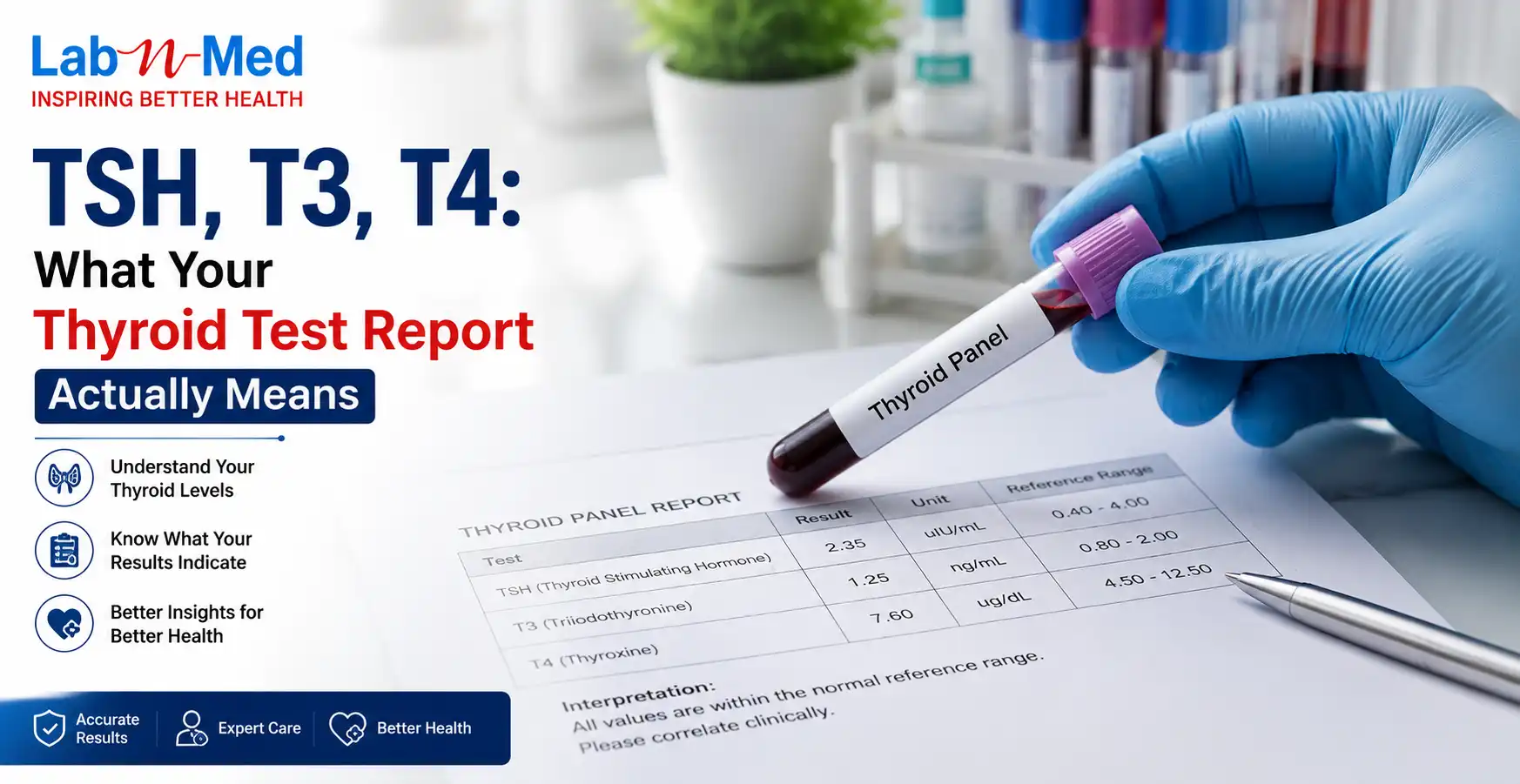
If you're looking at a report on your thyroid that's full of ad hoc numbers, you're certainly not alone. This guide will explain the significance of each number, including what's normal and what the doctor looks for when something's off.
What Is Thyroid Hormone?
The thyroid hormone regulates the speed of the body's metabolism. It influences how quickly you use energy and how fast your heart beats, and how your bones and skin regenerate themselves.
The thyroid gland is located on the top of the neck. It produces two major hormones that are the hormone thyroxine (T4) and triiodothyronine (T3). Together, they are referred to as thyroid hormones.
T4 is approximately 80% of what your thyroid produces, and T3 accounts for the remaining 20 percent. But T3 is the more active version. Your kidneys, liver,r and various other tissues convert T4 to T3 to allow your cells to actually utilize T3.

What Do TSH, T3, and T4 Actually Do?
The thyroid isn't working on its own. It receives orders from your brain via a feedback loop that involves three organs.
In the beginning, your hypothalamus releases a hormone that signals the pituitary gland. The pituitary gland releases TSH, which stands for thyroid-stimulating hormone. TSH is delivered to your thyroid, telling it what amount of T3 and T4 to create.
If T3 and T4 levels increase to a sufficient level, the brain is notified to stop producing TSH. If levels fall and the cycle begins again, it repeats. This cycle of back and forth ensures that your thyroid hormone levels remain stable.
This is the reason why TSH, T3, and T4 combined have more meaning than any one value on its own. A high TSH typically means your thyroid doesn't produce enough hormone, and your brain is trying to increase it. Low TSH generally signifies the reverse: your thyroid is hyperactive,e which causes your brain to back off.
The thyroid also requires Iodine from your diet to produce thyroid hormones T3 and T4 at the initial stage. If you don't have enough iodine, the entire feedback loop won't work correctly, which is the main reason why iodine deficiencies show up on thyroid panel scans in certain regions.
How Does a Thyroid Panel Compare to Other Blood Tests?
It is commonplace to lump a thyroid panel with a regular blood test; however, it's a test for something totally different.
A CBC test examines white cells, red cells, and platelets. The thyroid panel tests hormone levels in addition and doesn't cross-check blood cell counts. A lipid profile measures cholesterol levels, whereas it doesn't have any connection to the levels of fat in your blood. However, hypothyroidism that is not treated can raise cholesterol over time.
Doctors typically recommend a thyroid screening in conjunction with the CBC or a complete body examination, particularly for those with fatigue as the most frequent issue. This is due to the fact that fatigue could result from thyroid problems or both. The combination of both tests can help identify the causes of fatigue faster than testing only one at each.

Does Age or Pregnancy Change TSH, T3, and T4 Ranges?
Yes, thyroid levels change more than what people would expect to see at different stages of life.
In young children, TSH levels tend to be slightly higher than levels in adults, particularly during the early days of existence. Pediatric labs employ the reference levels of their labs, rather than charts for adults.
When pregnant, TSH targets decrease, particularly during the beginning of the trimester. The reason for this is that a pregnant hormone known as hCG moderately stimulates thyroid hormones, which naturally decreases TSH for a short period of time.
In older people, doctors may take a slightly higher TSH as normal, because thyroid function changes naturally with age in some individuals. A number that is at a borderline in someone who is 30 years old could be fine for those over 70.
This is precisely why comparing your results to an online chart may be inaccurate. Your lab's printed range includes certain of these variables;s however, the status of your pregnancy and age require a conversation with your physician.
What Is the Difference Between T3, T4, and TSH?
These three values are similar;ke however, they have different roles.
TSH isn't a part of your thyroid gland at all. It's from the pituitary gland and functions as a signal for control.
T4 is the hormone that your thyroid produces in the greatest quantity. It's almost inactive until the body converts it to T3.
T3 is the active thyroid hormone. It directly alters your metabolism, heart rate, and body temperature when it is converted from T4.
Imagine TSH as a manager. T4 is the material that you use as a raw that you can think of as the raw material, as well as T3 as the final product that your cells actually utilize. Doctors typically examine all three because each tells a unique aspect in the tale.
What Is the TSH Test Normal Range?
The table below outlines the TSH test ranges that the majority of laboratories use for adults. The printed range of your lab has precedence over any general chart.
| Group | TSH Normal Range |
| Adults (general) | 0.4 – 4.5 mIU/L |
| Optimal range (some experts) | 0.45 – 2.5 mIU/L |
| Pregnancy, 1st trimester | 0.1 – 2.5 mIU/L |
| Pregnancy, 2nd trimester | 0.2 – 3.0 mIU/L |
| Pregnancy, 3rd trimester | 0.3 – 3.0 mIU/L |
TSH is typically the first thing doctors look at since it's the most sensitive measure to determine thyroid activity. A slight change in TSH is often noticed before T3 or T4 levels alter at all.
What Are Normal T3 and T4 Levels?
The normal T3 levels and T4 levels vary based on whether the lab is measuring the entire hormone or only the active, free portion.
| Parameter | Normal Range (Adult) |
| Total T4 | 5.0 – 12.0 µg/dL |
| Free T4 | 0.8 – 1.8 ng/dL |
| Total T3 | 80 – 200 ng/dL |
| Free T3 | 2.0 – 4.4 pg/mL |
Free T4 and FreeT3 are generally considered to be more secure than the total values. This is because total values may change because of birth control pills, pregnancy, or liver issues even when thyroid function is in good order.

TSH T3 T4 Normal Range Chart (All Parameters)
This is a condensed chart that you can save for an overview of each thyroid-related parameter.
| Test Parameter | Normal Range | Unit |
| TSH | 0.4 – 4.5 | mIU/L |
| Total T4 | 5.0 – 12.0 | µg/dL |
| Free T4 | 0.8 – 1.8 | ng/dL |
| Total T3 | 80 – 200 | ng/dL |
| Free T3 | 2.0 – 4.4 | pg/mL |
| T3 Uptake | 24 – 39 | % |
| Anti-TPO Antibodies | Below 35 | IU/mL |
Keep this chart in mind or take note of it to use when you next receive a thyroid report.
What Do High and Low TSH, T3, and T4 Levels Mean?
Doctors seldom look at one value on its own. They examine the patterns between TSH and T4 Free T4 together.
| TSH | Free T4 | Likely Pattern |
| High | Low | Hypothyroidism (underactive thyroid) |
| Low | High | Hyperthyroidism (overactive thyroid) |
| High | Normal | Subclinical hypothyroidism |
| Low | Normal | Subclinical hyperthyroidism |
| Normal | Normal | Thyroid functioning normally |
Subclinical brain patterns indicate that the brain has been working more than usual to ensure that hormone levels remain constant even though your T4 levels haven't fallen yet. Doctors usually monitor these patterns in detail instead of taking action immediately.

What Are the Symptoms of Abnormal T3, T4, and TSH?
A thyroid imbalance can impact nearly every body system because thyroid hormone influences metabolism,m heart rate, and control of temperature.
| Condition | Common Symptoms |
| Hypothyroidism (high TSH) | Fatigue, weight gain, cold intolerance, dry skin, hair thinning, constipation, slow heart rate |
| Hyperthyroidism (low TSH) | Weight loss, rapid heartbeat, anxiety, heat intolerance, tremors, trouble sleeping |
Both patterns can impact the menstrual cycle of women. Unbalanced menstrual flow is a frequent reason for doctors to order the thyroid panel along with other blood tests.
A few symptoms won't be enough to confirm the existence of thyroid problems, as the changes in weight and fatigue are associated with other issues. Blood tests are the most common method of determining the severity.
The symptoms may take a while to show up, as changes in thyroid hormones tend to develop gradually instead of all at once. This is the reason thyroid issues are often under the radar for a long period until someone finally is examined.
How Is the T3, T4, TSH Test Procedure Done?
The T3, T4, and TSH test procedure is straightforward and doesn't require much preparation.
A phlebotomist will draw a small sample of your blood through a vein, typically in the arm. The procedure is done in less than five minutes and can cause only minor discomfort.
It isn't necessary to fast before the routine thyroid panel. But you should mention any thyroid medications to your phlebotomist before the test. If you are taking levothyroxine or similar medications, the doctor might ask you to draw blood before your dose every day to get the most accurate results.
The sample is taken to a laboratory, where an automated analyzer determines the hormone level. Results are typically available within a few hours. Lab n Med's home collection service: The entire draw is performed on your doorstep, which means you can skip the visit to a clinic completely.
Understanding Your Thyroid Report Step by Step
The process of reading a thyroid report becomes simpler once you understand the signs to look for.
1. Begin by checking the thyroid hormone. This is usually the first sign your doctor looks for, since this is the more sensitive indicator for thyroid health.
2. Look for the T4 level next. This tells you whether your thyroid is creating enough of the hormone or if it is producing too much.
3. Check T3 only in cases where T4 is not clear. T3 helps confirm certain conditions, for example, T3-toxicosis. T3 levels rise even when T4 appears normal.
4. Examine the range printed by your lab. Reference ranges shift slightly between labs and test methods, so be sure to verify the numbers in your results and not just a general chart.
5. Take the complete document to your physician. A single value seldom tells the entire story. Your doctor will review your medical history, symptoms, and all three of the values together before arriving at an answer.

What Conditions Can a Thyroid Panel Detect?
A thyroid panel can help doctors detect a range of conditions commonly seen. However, a definitive diagnosis usually requires more than one test.
Hypothyroidism. An underactive thyroid manifests as TSH levels that are high and low in Free T4. It's usually caused by Hashimoto's Disease, an autoimmune disorder.
Hyperthyroidism. An overactive thyroid is characterized by low TSH, with high T3 or Free T4. Graves"disease" is one of the well-known autoimmune causes.
Thyroiditis. Inflammation of the thyroid gland may temporarily increase hormone levels, either way, depending on the stage.
Goiter and thyroid nodules. These physical changes to the gland do not always alter hormone levels; however, an examination of the thyroid is often the first step before imaging.
Doctors may also request thyroid antibody tests in conjunction with TSH, T3, and T4 in the event that they suspect that an autoimmune issue is the cause of the imbalance.
How Should You Prepare for a Thyroid Test?
The preparation for the thyroid panel is not too difficult in comparison to other blood tests.
It's not necessary to fast before taking a standard TSH test, T3, or T4 blood test. A healthy diet before the test won't significantly alter the results. However, biotin supplements may cause problems with certain thyroid tests. Therefore, you should inform your doctor before taking them.
If you are already taking thyroid medication, make sure to have your blood drawn before the morning dose. The medication you are taking first may temporarily boost your T4 level and make it more difficult to read accurately.
It is best to have your test done at the same time in case you're comparing results across different reports. TSH naturally fluctuates slightly throughout the day, and it is important to have a consistent time of day for an accurate pattern.
Common Myths About Thyroid Testing
A few myths about thyroid tests come up time and again, so let's dispel them.
Normal myth: TSHH always indicates that there is a normal thyroid. In rare cases, there are instances where symptoms persist even when TSH levels are normal, particularly when the problem is related to T3 conversion, not TSH itself signaling.
The myth: you must fast before taking a thyroid exam. Fasting isn't required to perform a thyroid test on its own or if it's part of other tests that are fasting-dependent.
The myth that thyroid issues only influence body weight. Thyroid hormone affects the heart rate, mood, digestion, skin, and menstrual cycles,s not only body weight.
Myth: A single abnormal result is enough to confirm a diagnosis. Doctors usually repeat testing or add tests forantibodies beforeo confirming thyroid issues, particularly for borderline results.
Who Should Get a Thyroid Panel Test?
A few groups can benefit from thyroid tests on a regular basis more than other groups.
Women, particularly during pregnancy or following childbirth,h are at a greater risk of developing thyroid problems than men. Adults older than 60 ought to consider regular exams for thyroid disorders, since they tend to become more commonplace with age. People who have a family history of thyroid diseases or autoimmune disorders are also in a higher-risk group.
Any person who experiences unprovoked symptoms of fatigue, weight fluctuations, or irregular cycles is advised to consult with their doctor for a thyroid test. Patients already taking thyroid medications require regular testing to ensure that the dosage they are taking is right, since the needs of thyroid patients can change with the course of.
If you're in any of these categories, speak with your doctor about the frequency you should take a test again. The majority of healthy adults without symptoms require more than a few times a year for a check-up.
Should You Get a Thyroid Test at Home or at a Lab?
Both methods offer the same level of accuracy, so tlong asthe lab is following appropriate collection guidelines.
Home collection reduces travel time and is ideal for those with chronic illnesses, such as elderly patients, and those with a hectic schedule. A qualified phlebotomist arrives at your home, draws the sample in the same manner a lab would do, and takes it away in the right storage conditions.
A visit to a lab in person is a good idea when you require multiple tests performed at the same time or want immediate verification of your sample. In either case, ensure that the laboratory is NABL accredited. This assures that your results are consistent with high standards, regardless of the location from which the sample was collected.
Lab n Med provides a free home sample collection for thyroid panels. It offers the same precision and accuracy that you receive from a visit in person. This allows you to be consistent with the follow-up testing, especially when your doctor would like to repeat the test over a few months.
What Is the Thyroid Test Price?
The cost of a thyroid test in India depends on the parameters the panel includes.
A TSH-only basic test usually is less expensive than a full thyroid profile, which comprises T3, T4, Free T3 as well as Free T4 together. At LabnM,e d an entire thyroid profile is affordable and includes free samples taken at home and reports sent within the same day.
If you're comparing costs across labs, you should look at three factors that are important: the number of parameters the panel has, whether they are NABL accredited, and how fast the reports are provided. The lower price is not necessarily a good thing when the panel doesn't include key parameters your doctor requires. and receive accurate results without ever leaving your home.
Frequently Asked Questions
Q1. What is a normal level of TSH in adults?
A normal TSH level for adults ranges between 0.4 and 4.5 mg/L. Some doctors recommend a stricter ideal interval between 0.4andto 2.5 mIU/L, particularly for those already taking thyroid medications.
Q2. What does a high TSH and normal T4 indicate?
High TSH with normal T4 is usually a sign of hypothyroidism that is subclinical. Your brain is working more to communicate with your thyroid even though your hormone levels haven't yet dropped. Doctors usually monitor this behavior before starting treatment.
Q3. Do stress levels affect TSH or T3, T3 and levels of T4?
Yes, prolonged stress can affect thyroid hormone levels indirectly through the cortisol response in the body. But stress by itself seldom causes a complete thyroid disorder that does not have an underlying issue.
Q4. Does fasting have to be done before a thyroid test?
No, fasting is not necessary prior to any TSH test, T3, or T4 test. Fasting is only required when your doctor has prescribed other tests that require fasting in conjunction with it.
Q5. What is the distinction between Free and Total T4?
Total T4 measures the total amount of thyroxine present in your blood, which includes hormones that are bound to proteins. Free T4 only measures those hormones that are active and unbound; this is the reason why doctors believe it to be more reliable.
Q6. What is the best time to take a thyroid exam?
Healthy adults with no symptoms generally don't require routine thyroid tests. Individuals who have symptoms, an underlying family history, or are taking thyroid medication typically need to be tested each year at least once, depending on their physician's guidance.
Q7. Do thyroid issues cause weight increase?
Yes, an inactive thyroid can slow metabolism and can cause weight increase. An overactive thyroid does exactly the opposite, often resulting in an unexplained loss of weight.
Q8. How much is the cost of a full Thyroid Profile check?
A full thyroid profile, which includes TSH, thyroid T3, and T4, is affordable by LabnMed and includes no-cost samples taken at home. Prices may differ based on location and the current offers. So, make sure you check the latest rates before making an appointment.
Final Thoughts
The understanding of TSH, T3, and T4 described in simple words makes the next lab report much easier to comprehend. These three numbers work as a unit, not as independent, separate numbers.
TSH will tell you how much the brain works to communicate with your thyroid. T4 is the raw hormone that your thyroid is producing. T3 informs you of the amount of the active hormone that your body is able to utilize. The combination of all three, instead of in isolation,n provides the clearest image of how your thyroid functions.
The ranges can vary based on age, lab, and the status of your pregnancy, so make sure to examine the range that appears on your report first. This guide can serve as a reference to follow the advice of your doctor,r and don't be afraid to inquire during your next appointment if anything is unclear.
Are you ready to assess your thyroid levels? today to get precise, doctor-reviewed results with no need to get away from your home.