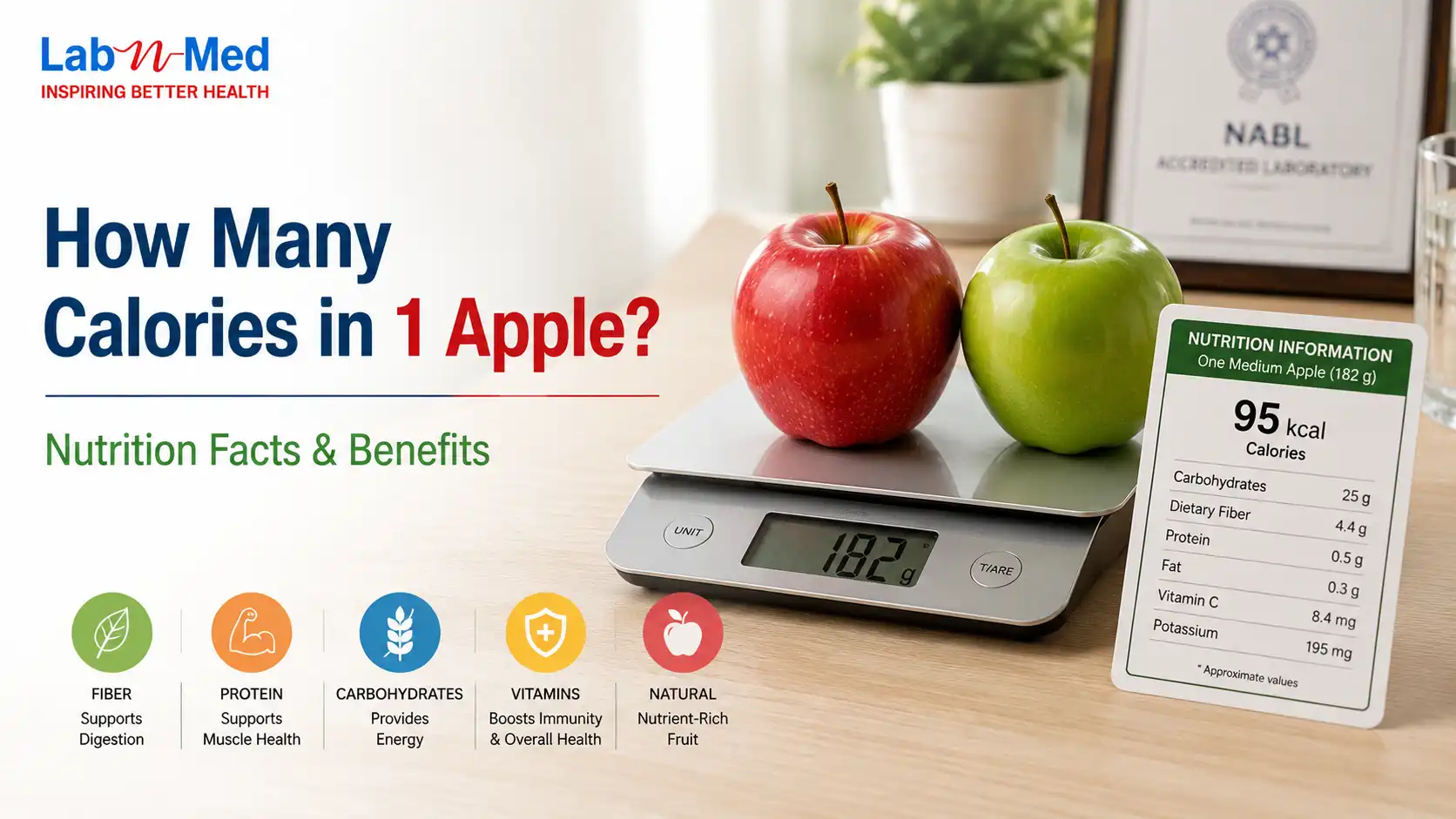
The number of calories in 1 apple is largely determined by its size and weight.
Apples are among the simplest fruits to add to your diet. They are easily portable as well as naturally sweet. They also provide the fiber you need, along with vitamins and plant-based compounds.
However, how many calories does an apple really have?
Are green apples healthier? Less energy than a red one? What is the number of calories in half an apple? What is the equivalent of an apple slice as well as 100 grams of apples?
This guide provides answers to each of these questions.
How Many Calories Are in 1 Apple?
The number of calories in 1 apple depends on its size. A medium-sized apple of 182 grams has around 95 calories. Smaller apple sizes have fewer calories, whereas bigger apple sizes have more.
Calories per apple in 1 size
| Apple size | Approx. weight | Approx. calories |
|---|---|---|
| Small apple | 149 g | ~78 calories |
| Medium apple | 182 g | ~95 calories |
| Large apple | 223 g | ~116 calories |
| 100 g of apple | 100 g | ~52 calories |
| Halfa medium apple | 91 g | ~47 calories |
When someone asks how many calories are in 1 apple, the most straightforward answer is approximately 95 calories for a medium-sized apple.
The number of apples can vary due to apples differing in size and quality. Thus, weight provides an accurate number instead of counting one complete fruit.

What Are the Nutrition Facts of 1 Apple?
A medium apple has more calories than the average apple.
This 1 apple's calorie and protein profile is beneficial for those who are tracking their intake of food. Medium apples contain around 95 calories and 25 grams of carbohydrates and approximately four milligrams of fiber. Protein levels are very low.
Nutritional value of 1 medium apple
| Nutrient | Approximate amount |
|---|---|
| Calories | 95 kcal |
| Carbohydrates | 25 g |
| Dietary fiber | 4 g |
| Total sugar | 19 g |
| Protein | ~0.5 g |
| Fat | ~0.3 g |
| Vitamin C | ~9 mg |
| Water | High |
These figures are approximate due to the size and variety of apples, which may affect the final nutrition profile.
Most people believe that nutrition value of apples is less from protein and more from the combination of carbohydrates, fiber, micronutrients, water, and plant substances.
How Many Calories Are in an apple per 100 g?
If you're tracking foods by weight, 100 grams of a raw apple with the skin is approximately 52 calories.
This helps make it possible to calculate the calories in 1 apple per 100g very simply:
- 100 g apple = ~52 calories
- 150 g apple = ~78 calories
- 180 g apple = ~94 calories
- 182 grams medium apple = 95 calories
- 200 g apple = ~104 calories
- 250 g apple = ~130 calories
USDA-derived nutrition information lists raw apples with skins at about 50-52 calories per 100 grams, based on the database's reference and rounding.
If your apple appears very large or small, the weight will provide a better idea of its calories.
How Many Calories Are in 1 Apple Slice?
It is believed that the calories in 1 apple slice vary based on its size and thickness of it is.
For instance, an apple of medium size averages 95 calories, and is divided into eight equally sized pieces, then each is approximately twelve calories.
In the event that an apple were divided into 16 pieces, each piece would contain around six calories.
The exact amount isn't set because slices aren't always identical.
To ensure accurate tracking of calories, you should weigh the apple or portion instead of relying solely on the number of slices.

How Many Calories Are in Half an Apple?
Half of a medium-sized apple has 47 to 48 calories.
It's only half of the approximately 95 calories in an apple of medium size.
Half an apple is beneficial when you are looking to eat fruit with your meal; however, you need to monitor portions.
For instance, you could make a half-apple with:
- Unsweetened yogurt
- Nuts
- Peanut butter
- Oatmeal
- Cottage cheese
- A healthy, balanced breakfast
The total number of calories will be determined by the ingredients added to the.
How Many Calories in 1 Apple and Protein?
1. 1 apple calories and protein combination is worth a look since apples are frequently described as nutritious snacks, but they're not a protein-rich food item.
A medium-sized apple will provide about:
- 95 calories
- 25 g carbohydrates
- about 0.5 g protein
- 4 grams of fiber
- around 19 g of natural sugar
Therefore, if your aim is to eat a protein-rich snack, an apple on its own isn't enough.
You can also pair the two with a protein-rich meal like Greek yogurt and nuts or a different protein source.
This makes for a healthier snack while preserving the natural sweetness of apples and fiber.
How Much Fiber Is in 1 Apple?
A medium-sized apple contains approximately 4 grams of fiber.
This makes fiber one of the most beneficial nutritional aspects of the apple.
Its 1 apple calories and fiber combination is suitable for those who are looking for a satisfying snack.
Fiber is a form of carbohydrate that our body is unable to completely digest. It may aid in digestion and can help in achieving feelings of feeling full. Insoluble and soluble fibers serve distinct roles in the digestive system.
What is the importance of apple fiber?
Apple fibers can be:
- Support normal digestion
- Add bulk to stool
- Help to create fullness
- Help to maintain a balanced eating routine
- Feed beneficial gut flora
A large portion of the apple's fiber and plant components is located within or near the skin.
This is why eating a freshly washed apple with the skin may give more fiber than eating just the flesh.

How Much Sugar Is in 1 Apple?
A medium-sized apple has around 19 grams of sugar that is naturally occurring.
This number could appear to be excessive when you read it on the nutrition label.
The main differentiator lies in the fact that the sugar contained in an apple contains water, fiber, as well as other nutrients.
Whole fruit can be different from juice. Juicing removes a lot of the fiber, making it easier to eat more fruit quickly.
It is therefore better to examine the entire nutritional characteristics that an apple has instead of looking at the fruit solely by the amount of sugar it contains.
Anyone suffering from diabetes or any other medical conditions that require a carbohydrate-controlled diet must consider their meal plan size, portion size, and medical guidance.
Full Body Test Package in Gurgaon
How Many Carbs Are in 1 Apple?
A medium-sized apple has approximately 25g of carbs.
These carbs are sugars that naturally occur and diet fiber.
For those who track their carbs, the serving size is crucial.
A smaller apple will have fewer carbohydrates than a larger apple. In the same way, half an apple can contain about half the carbs of the entire fruit.
Another reason is that the calories in 1 apple must be weighed along with the weight of the apple.
Is There a Difference Between Red and Green Apple Calories?
Green and red apples may have slightly different nutritional profiles; however, the weight and size of apples influence the total calories more than color alone.
Green apples are not always a healthy food, and the red apple isn't necessarily a food that is high in calories.
When two apples weigh about the same, the calories generally fall within the same range.
Apples with red and green colors
| Feature | Green apple | Red apple |
|---|---|---|
| Calories | Similar when the weight is the same | Similar in weight when the weight is comparable |
| Carbohydrates | Present | Present |
| Fiber | Fiber is used to provide | Fiber is used to provide |
| Natural sugar | Varies based on the variety | Variable based on the variety |
| Vitamin C | Varies | Varies |
| Plant compounds | Variables are based on the variety | Varies based on different varieties |
When you're calculating the calories in 1 apple concentrate, first consider the weight of the apple.
What Vitamins and Minerals Are in 1 Apple?
Apples contain a variety of micronutrients, but they should not be thought of as the primary source of each vitamin or mineral.
A medium apple has around 9 milligrams of Vitamin C in addition to lesser amounts of other micronutrients.
Apples also contain plant-derived compounds like flavonoids and other phytochemicals.
Harvard's Nutrition Source lists apples as a source of fiber, vitamin C, and various phytochemicals, such as catechins and quercetin.
Apple nutrition includes:
- Vitamin C
- Potassium
- Fiber
- Natural carbohydrates
- Plant polyphenols
- Water
But no single fruit can provide everything your body requires.
That's why it's important to have variety.
What Are the Benefits of Eating 1 Apple?
1 apple's 1 apple benefits outweigh its calories.
Apples can be an excellent component of a well-balanced diet as they supply carbohydrate, fiber, water, and plant-based components in a convenient, whole-food package.
1. Apples contain dietary fiber
Fiber is among the most important nutritional benefits of eating apples whole.
It is a great aid to digestion and aids in fullness. Apples are rich in both soluble and insoluble fiber.
2. Apples provide vitamin C
Vitamin C assists in a variety of essential functions within the body.
Apples contain some vitamin C, but they're not among the most abundant sources when compared to other fruits like oranges, kiwi, and strawberries.
3. Apples provide plant compounds
Apples are a natural source of phytochemicals that include flavonoids.
Quercetin and other substances found in apples have been investigated to determine their health-related effects. This research on food cannot be taken as proof that apples are able to prevent or treat any specific illness.
4. Apples are a great snack
An apple requires little preparation.
It is possible to carry it for school, work, or when you travel.
It is easier to select whole fruits instead of snacks that are highly processed.
5. Apples can provide fiber to meals
A fruit-based breakfast or snack will help you get more fiber-rich food items.
For instance, you could add slices of apple to oats or mix them with plain yogurt.

Can Eating an Apple Help With Weight Loss?
Apples can be a part of an eating plan for weight loss, but an apple doesn't directly result in a reduction in weight.
The calories of an apple are modest for a fruit in its entirety; in addition, the fruit provides water and fiber.
Research conducted by Harvard's Nutrition Source has linked an increased intake of fiber-rich fruits such as apples and pears to lower weight gain over time. However, adding apples to an already-calorie-laden diet isn't the same as replacing a food with a higher calorie by eating an apple.
A simple example
Instead of eating a highly processed sweet treat, it is possible to choose:
1 medium apple + a protein-rich food
This can result in an unbalanced snack.
The amount of calories you consume, as well as your activity level, sleeping pattern, eating habits, and overall health, are all important to weight control.
Blood test at Home in Gurgaon -
Is It Healthy to Eat 1 Apple Every Day?
For the majority of individuals, one apple can easily be included in a balanced diet.
The benefits of eating a single apple a day are due to the addition of whole fruits to an overall healthy diet.
Bu, you don't have to eat just one apple a day to stay healthy.
It is possible to rotate apples with other fruits, such as:
- Oranges
- Guava
- Papaya
- Berries
- Pears
- Bananas
- Kiwi
The consumption of different fruits allows you access to a broader range of plant nutrients and plant compounds.
Is an Apple Better Than Apple Juice?
In the majority of everyday meals for most everyday eating, a whole apple offers the benefit of fiber that is not lost.
Whole apples can take a bit longer to chew and eat.
The juice of an apple, if it does not contain added sugar, is a lot easier to consume in a short time. Certain processing methods can also decrease or eliminate fiber and other plant compounds.
So, if your aim is to reap the best from the apple itself, pick a whole apple more frequently.
Should You Eat an Apple With or Without the Skin?
If you like the skin and are able to take it, eating a clean apple with its skin could give you more nutrients and fiber.
Harvard observes that the removal of skin snuffs out a significant amount of fiber, as well as a large amount of flavonoids.
Prior to eating, clean the apple thoroughly with running water.
Avoid using household soap or detergent on fresh fruits and vegetables.
If you suffer from an intestinal condition or for any other reason, to stay away from apple skin, follow the recommendations of your physician.
How Many Calories Are in 2 Apples?
Two medium apples are approximately 180 calories.
The formula is easy:
95 calories divided by 2 equals 191 calories.
But two apples of smaller size are less calorie-rich, but two large ones will have a lot more calories.
This is why the apple weight is more important than recording the number of apples.
How Many Calories Are in 1 Apple Compared With Other Snacks?
A medium-sized apple has around 95 calories.
It is easy to add it to the form of a lunch or snack.
| Food | Approximate calories |
|---|---|
| Medium apple | 95 Kcal |
| Half a medium apple | 47 Kilocalories |
| 100 g of apple | 52 Kilocalories |
| 2 medium apples | >190 Kcal |
Keep in mind that the calorie count for snacks in packages can differ substantially based on brand, ingredients, serving size, and portion size.
What Is the Best Time to Eat an Apple?
There is no scientifically confirmed "perfect" time to eat an apple.
Apples are delicious:
- Breakfast at the table
- For a mid-morning snack
- Prior to or following an exercise
- Lunch included
- For a snack in the evening
What's more important is the overall eating style and the size of your portion.
If you find that fruit is more satisfying when paired with healthy fats or protein, try having your fruit with a protein-rich food item.
Can Apples Be Part of a Diabetes-Friendly Diet?
Apples are a source of carbohydrates as well as naturally occurring sugar, and so the size of portions can be important for people who are managing blood glucose levels.
Additionally, whole apples are a source of the nutrient fiber.
Harvard states that whole fruits typically contain a low amount of glycemic load; however, individual reactions to food can be different.
If you suffer from diabetes, prediabetes, or any other condition that requires control of carbohydrate intake, you should consider an entire meal instead of considering the calories in 1 apple by itself.
Your physician or registered dietitian can guide you in choosing the right portion that meets your specific requirements.
What Is the Bottom Line on Calories in 1 Apple?
The answer is easy:
A medium apple has approximately 95 calories.
The precise amount of calories in 1 apple will depend on its dimensions and mass. 100 grams of apple has approximately 50-52 calories. A larger apple could have over 100 calories.
Beyond the calories, apples provide:
- Fiber
- Carbohydrates
- Natural sugar
- Vitamin C
- Plant compounds
- Water
1. The 1 apple benefits can be a useful option to add to your diet.
For the majority of people, the best strategy is not to focus solely on the calories in 1 apple. Examine the complete nutritional profile of the fruit and how it fits into your diet overall.
If you're evaluating the levels of cholesterol, blood sugar, and weight, or are suffering from nutritional deficiencies, personalized medical advice is more effective than relying solely on one food item.
Frequently Asked Questions About Calories in 1 Apple
1. How many calories can be found in one apple?
A medium-sized apple that weighs around 182 grams is about 95 calories. A smaller apple can have a calorie count of 7,8 and a bigger apple could contain over 100 calories. The exact calories of an apple will depend on the weight and size of the apple.
2. How many calories are contained in 100g of an apple?
A fresh apple without skin has around 50-52 calories for 100 grams. Thus, a 150-gram apple is about 78 calories, whereas a 200-gram one would have around 104 calories. The number of calories can differ slightly based on different varieties and databases.
3. How many calories can be found in one slice of apple?
It is believed that the calories in 1 apple slice are contingent on the dimensions of the slice and the size of the apple. A medium-sized apple has around 95 calories, and it is split into 8 equal slices; each slice would contain around 12 calories. The actual slices may differ in dimensions.
4. The amount of calories, as well as protein, in an apple?
One medium apple has around 95 calories and around 0.5 milligrams of protein. Apples are not a protein-rich food. If you want a snack that is more filling, make sure to pair the apple with a protein-rich snack like unsweetened yogurt or even nuts.
5. How much fiber is present in one apple?
An average apple has about 4.0 grams of fiber. Fiber aids in digestion and may help to increase the feeling of fullness. Eating an apple eaten by peeling it can give more plant compounds and fiber than eating only the flesh.
6. Does an apple aid in weight loss?
Apples can be a part of a diet for weight loss since it has a small amount of calories in addition to water and fiber. However, apples don't directly contribute to weight loss. The way you manage your weight is based on the consumption of calories, choices in food, as well as physical activity, and other personal variables.
7. Are green apples more nutritious in calories than red apples?
Not necessarily. The difference in calories between red and green apples is generally less significant than the size of the fruit and its weight. Two apples with the same weight usually have the same number of calories. The nutritional composition of different apples can vary, which is why color alone isn't an accurate way to determine calories.
8. Does it make sense to eat an apple a day?
For the majority of people, apples can be an integral part of a balanced daily diet. Apples contain vitamins C, fiber, water, and plant substances. However, consuming a range of fruits is much better than relying on one particular fruit by itself. Individuals with nutritional or medical needs must seek individual advice.
Quick Apple Nutrition Summary
| Question | Answer |
|---|---|
| Calories per apple | 95 Kcal for a medium-sized apple. |
| 100 g apple calories | 50-52 Kilocalories |
| Half a medium apple | 47-48 Kcal |
| 2 medium apples | 190 Kilocalories |
| Carbs in 1 medium-sized apple | ~25 g |
| Fiber in 1 medium-sized apple | ~4 g |
| Sugar in 1 medium-sized apple | ~19 g |
| Protein in 1 medium apple | ~0.5 g |
| Vitamin C | ~9 mg |
| Best portion guide | Take into account the weight of apples |
USDA as well as Harvard nutrition references substantiate the frequently used medium apple with 95 calories figure.
Final Takeaway
If you're thinking about how many calories there are in one apple, keep in mind the following simple figure: about 95 calories for a medium-sized apple.
The calories contained in an apple differ with the size; however, the fruit also contains carbohydrates, fiber, as well as sugar that naturally occurs, Vitamin C, and beneficial phytochemicals.
1. The 1 apple benefits can therefore be extended beyond weight control. Whole apples are an ideal option to include the fruit and fiber you need in your diet.
To ensure a healthy eating routine, make sure you are eating a variety. Mix whole fruits and whole grains, vegetables, as well as protein sources, in addition to other food items that are high in nutrients.
If you're worried about your blood sugar levels, nutritional deficiencies, or another health issue, talk to an experienced healthcare professional instead of relying on information regarding calories.
Read Also... Blood Test at Home in Gurgaon: Which Lab Is Fastest & Accurate?
Read Also... HbA1c Explained: Your 3-Month Blood Sugar Average
Read Also... CRP Test: What High Inflammation Markers Mean